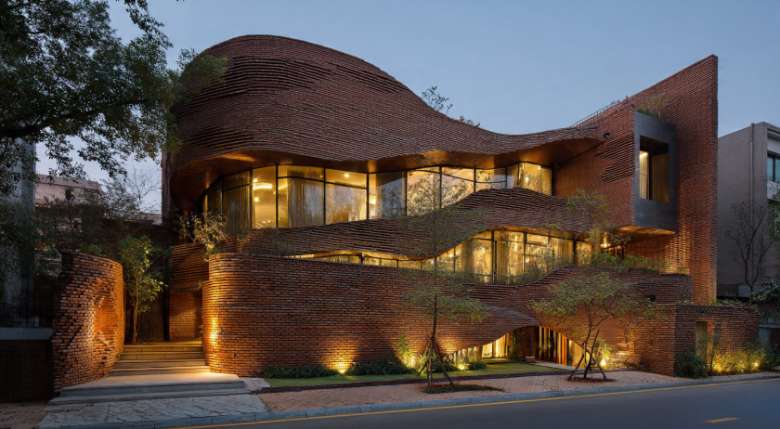
If you’ve come across the project featuring an undulating brick façade that allows light to stream in without sacrificing privacy, you’re looking at a powerful example of how architecture can solve practical problems through design.
At first glance, it appears like a sculptural wall made of flowing bricks. But beyond aesthetics, this façade is designed with purpose—it controls light, maintains privacy, and enhances the overall spatial experience.
In this guide, I’ll break down how this architectural concept works, why it matters, and what makes it stand out in modern design.
Key Takeaways (Quick Summary)
- The façade uses undulating brick patterns to filter light naturally
- It maintains privacy without blocking airflow or visibility completely
- Brick placement creates a dynamic, sculptural exterior
- The design blends functionality with artistic expression
- It reflects modern architecture’s focus on sustainability and comfort
What Is an Undulating Brick Facade?
An undulating brick façade is a wall system where bricks are arranged in a wave-like or curved pattern rather than in a flat, uniform surface.
Instead of acting as a solid barrier, the façade becomes a semi-permeable layer. Small gaps, angles, and variations in brick placement allow light and air to pass through while still providing coverage.
Architects use this technique to create surfaces that are both functional and visually striking. In many contemporary projects, brick is no longer just a structural material—it becomes a design element that defines the entire building.
1. How the Design Allows Light Without Losing Privacy
The most interesting feature of this façade is how it balances two opposing needs—light and privacy.
Traditional walls either block light completely or rely on large windows that reduce privacy. This design solves that problem by using carefully spaced bricks.
Because the bricks are angled and arranged in layers, they:
- Allow soft, diffused light to enter
- Block direct lines of sight from outside
- Create shifting light patterns throughout the day
This means you get natural illumination inside the building without exposing the interior fully.
2. The Role of Brick Orientation and Pattern
The effect of the façade comes from how each brick is positioned.
Instead of stacking bricks in straight lines, architects rotate and offset them to create a flowing surface. This approach mimics the movement of fabric or waves, giving the structure a dynamic appearance.
In similar projects, architects have used gradients of brick angles to imitate soft, draped forms, even though the material itself is rigid.
This combination of rigid material and fluid design is what makes the façade visually compelling.
3. Why Brick Is Still Relevant in Modern Architecture
Brick is one of the oldest building materials, but projects like this show how it continues to evolve.
Today, brick is used not just for durability but also for:
- Texture and depth
- Climate responsiveness
- Sculptural expression
Modern architects are reimagining brick as a flexible design tool rather than a basic construction element.
In many contemporary buildings, brick facades are designed to interact with light, shadow, and air, creating a more engaging experience.
4. Privacy Without Isolation
One of the biggest challenges in architecture is maintaining privacy without making spaces feel closed off.
This façade achieves that balance by acting like a filter instead of a barrier.
From the inside, occupants can still perceive light and subtle movement outside. From the outside, the interior remains partially concealed.
This creates a sense of openness while still protecting personal space.
5. Environmental and Sustainability Benefits
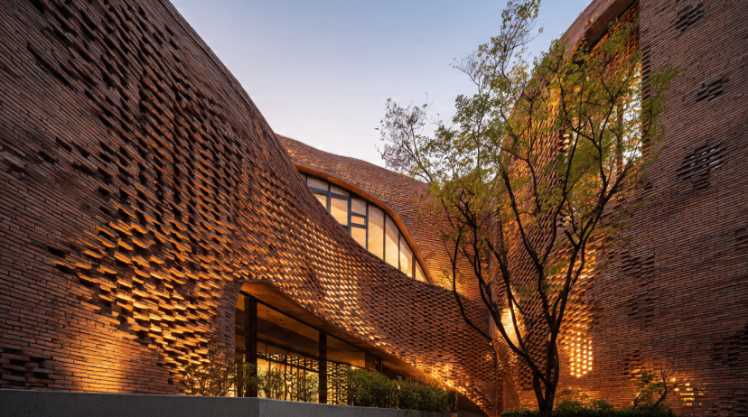
Beyond aesthetics, this design also supports sustainable architecture.
By allowing natural light to enter, it reduces the need for artificial lighting during the day. The gaps between bricks also improve ventilation, helping regulate indoor temperature.
These features contribute to:
- Lower energy consumption
- Improved indoor comfort
- Reduced reliance on mechanical systems
This aligns with modern design principles that prioritize energy efficiency and environmental responsibility.
6. The Visual and Emotional Impact
The undulating brick façade does more than serve a functional purpose—it creates an emotional experience.
As sunlight passes through the openings, it produces patterns of light and shadow that change throughout the day. This makes the building feel alive and constantly evolving.
The flowing brick pattern also softens the rigidity of traditional structures, making the architecture feel more organic and approachable.
7. Why This Design Stands Out
In a world where many buildings rely on glass and steel, this approach stands out for its use of a traditional material in a modern way.
It combines:
- Craftsmanship
- Innovation
- Functionality
The result is a structure that is both practical and artistic.
This type of design shows how architecture can solve everyday problems—like lighting and privacy—while still creating something visually unique.
8. Common Applications of This Design Approach
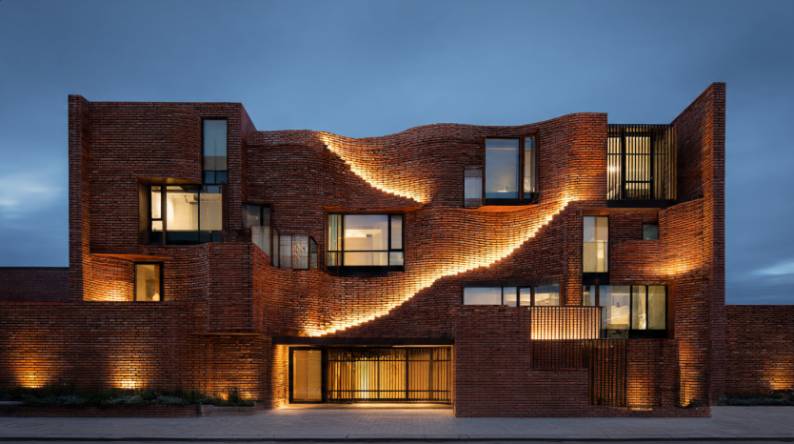
Undulating brick facades are increasingly used in various types of buildings.
These include:
- Residential homes
- Cultural centers
- Galleries and exhibition spaces
- Office buildings
In each case, the goal is the same—to create a balance between openness and enclosure.
Frequently Asked Questions
1. What is an undulating brick façade?
It is a wall design where bricks are arranged in a wave-like pattern to allow light and airflow.
2. How does it provide privacy?
The angled brick placement blocks direct views while still allowing light to pass through.
3. Is this design energy-efficient?
Yes, it reduces the need for artificial lighting and improves natural ventilation.
4. Why use brick instead of glass?
Brick offers better privacy, texture, and thermal performance while still allowing creative design.
5. Where is this type of design commonly used?
It is used in homes, galleries, offices, and cultural buildings.
A Modern Take on a Timeless Material
This undulating brick façade is a perfect example of how traditional materials can be reimagined for modern needs.
It shows that architecture doesn’t always require new materials or complex technology. Sometimes, innovation comes from using familiar elements in new ways.
By combining light, privacy, and design, this approach creates spaces that are both functional and inspiring.