

Organisations manage increasing volumes of financial records, legal agreements, compliance documents, and corporate reports. At the same time, expectations around regulatory compliance, stakeholder transparency, and transaction readiness continue to grow. Businesses must ensure that critical information remains organised, accessible, and secure across multiple functions. Companies should evaluate whether existing document management practices can support these evolving requirements effectively.
To address these demands, organisations increasingly rely on a data room to centralise critical materials. These platforms support fundraising, mergers and acquisitions, audits, compliance reviews, and board-level communication. Reliable document access helps reduce delays, improve collaboration, and maintain greater control over sensitive information.
Information Readiness Enhances Decision Quality
Executive decisions depend on access to accurate and current business information. During acquisitions, expansion initiatives, or investment discussions, leadership teams often review financial statements, contracts, and operational reports under strict timelines. Centralised document access helps decision-makers locate relevant materials quickly and verify information efficiently.
This level of preparedness reduces delays that can affect negotiations or strategic planning efforts. Reliable documentation supports stronger evaluations and more confident business decisions. Information readiness can become a significant advantage when opportunities require prompt action.
Transparency Supports Stronger Business Relationships

Trust grows when stakeholders can access accurate information confidently. Investors, lenders, advisors, and business partners often review financial performance, governance records, and contractual obligations. A structured document environment supports secure information sharing during fundraising, negotiations, and partnership evaluations. Consistent access to verified records demonstrates accountability and strengthens organisational credibility.
Key benefits include the following:
- Investors can review information more efficiently through controlled access.
- Advisors gain visibility into verified records during due diligence.
- Partners benefit from consistent and transparent information sharing.
Prepared Documentation Accelerates Major Transactions
Mergers, acquisitions, and fundraising activities require extensive due diligence processes. Buyers, investors, and advisors frequently request access to financial records, legal documents, intellectual property files, and compliance materials. Organised documentation helps organisations respond efficiently to these requests without disrupting normal operations.
A centralised repository reduces administrative effort and simplifies information sharing across multiple parties. Faster due diligence reviews can help maintain transaction momentum and reduce unnecessary delays. Strong preparation contributes to more efficient execution throughout complex corporate transactions.
Governance Relies On Organised Records
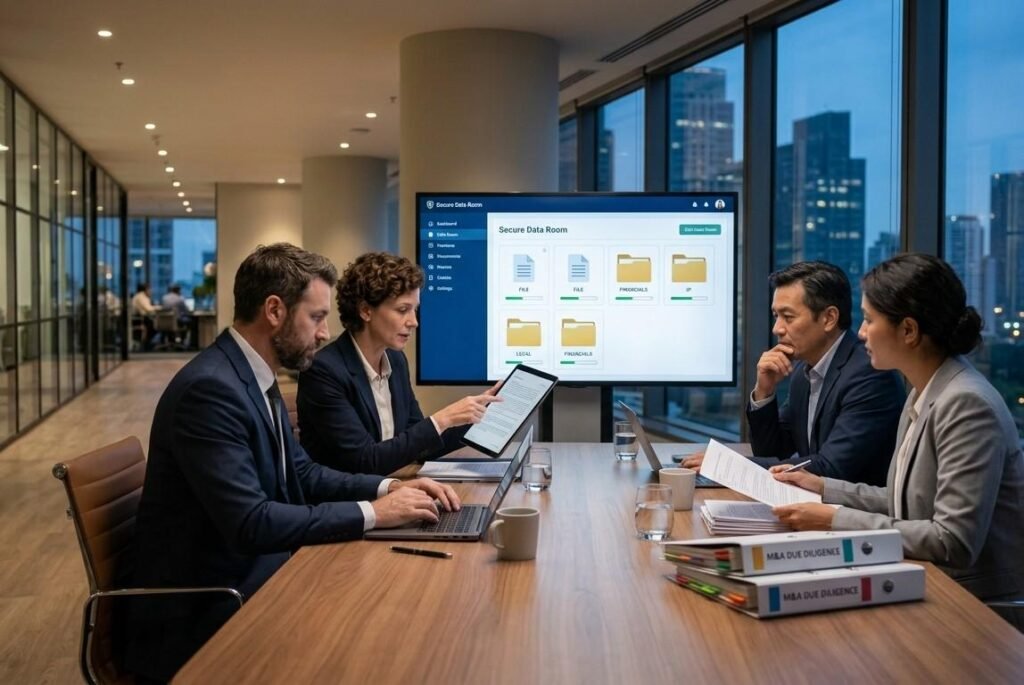
Effective governance depends on accurate documentation and reliable oversight. Leadership teams need visibility into policies, contracts, financial activities, and compliance obligations. Organised records simplify audits, support regulatory reviews, and strengthen internal accountability. Accessible documentation helps organisations verify requirements and respond efficiently to inspections or investigations.
Several important outcomes include:
- Audit preparation becomes easier through centralised document management.
- Compliance reviews benefit from accurate historical business records.
- Policy verification relies on accessible and organised documentation.
Strategic Value Reaches Beyond Storage
Information management now plays a central role in business strategy. Modern data rooms support stakeholder communication, governance initiatives, transaction readiness, and executive reporting within a single environment. Centralised records reduce inefficiencies that arise when documents remain scattered across multiple systems.
Consistent access to critical materials improves coordination between departments and external advisors. These capabilities help organisations respond more effectively to audits, investment opportunities, and corporate transactions. Strategic value extends far beyond document storage because information remains ready whenever important decisions arise.
The value of a virtual data room depends on how effectively it aligns with organisational requirements. This is especially important when evaluating Virtual Data Rooms for Startup needs, where secure document sharing, investor communication, and transaction readiness can directly influence growth opportunities.
Features such as document security, user permissions, audit trails, compliance support, and accessibility deserve careful evaluation. Organisations should compare available solutions and assess which platform best supports governance, transaction readiness, and stakeholder communication.
The right platform can enhance collaboration, oversight, and document control across critical activities. Careful platform selection can deliver meaningful value throughout the investment lifecycle.